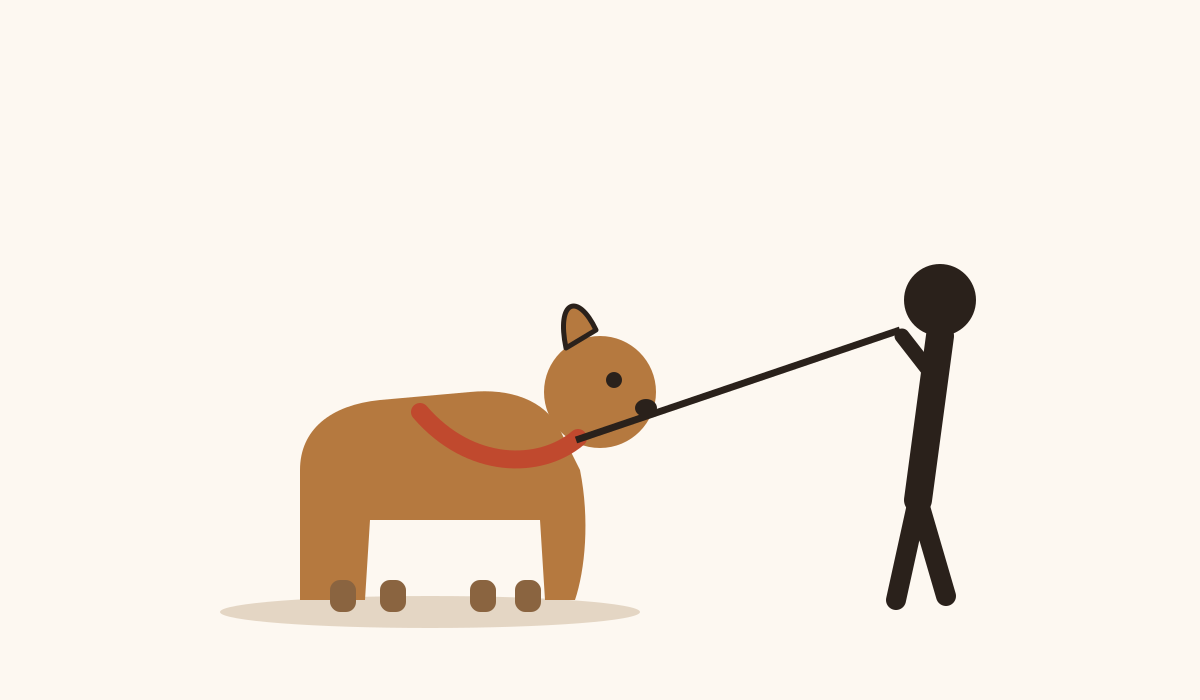
You take the harness off and there it is: a bald patch behind the front leg, pink underneath, maybe a little crusty at the edge. The dog has been fine on walks. Nothing dramatic happened. It just wore away, a millimetre at a time, on every single walk.
It is not a pulling problem or a shoulder biomechanics problem, which is probably why it gets less attention. It is about one strap sitting on thin skin. It is about one strap sitting on thin skin.
What is happening under there
Friction is the cause. Inflammation is the result. It gets worse where two skin surfaces sit against each other and stay wet.
Veterinary dermatology has a term for that last situation: intertrigo, or skin fold dermatitis. Frane Banovic and Emily Strzok, writing in Today’s Veterinary Practice, describe it as “frictional trauma resulting in inflammation and/or microbial overgrowth of closely apposed skin surfaces.” Once a surface is damp and warm, the bacteria and yeast that normally sit harmlessly on skin have somewhere to multiply.
One thing worth being careful about. The folds that paper describes are anatomical ones — facial, lip, tail, perivulvar — and confirming intertrigo takes a vet, often with cytology. An armpit under a strap resembles that picture: thin skin, a crease, trapped moisture. Whether a particular rub has become intertrigo is a diagnosis, not something this page can make from your description.
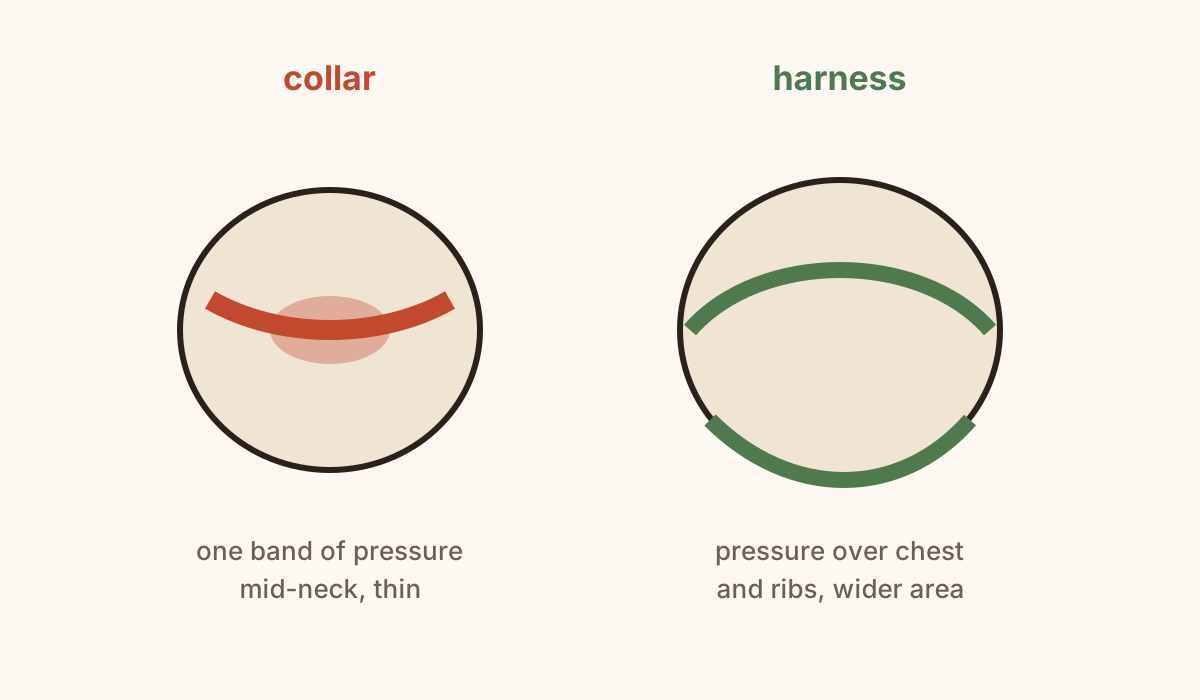
A harness spreads load over a wider area than a collar does. It does not remove the load, and the edges of that area take more of it than the middle.
Why it is always the armpit
The skin inside the front leg is thin, and there is very little coat there to wear away before you are looking at skin rather than hair.
That skin also slides and folds with every stride, while the strap does not move with it — so something has to give, and it is not the webbing.
Then moisture. Saliva, rain, a puddle, a swim, a humid day: a crease holds damp far longer than a flat surface, and a damp strap is abrasive in a way a dry one is not.
Put a dog who pulls into that, and the strap is under load on every walk instead of resting on the coat.
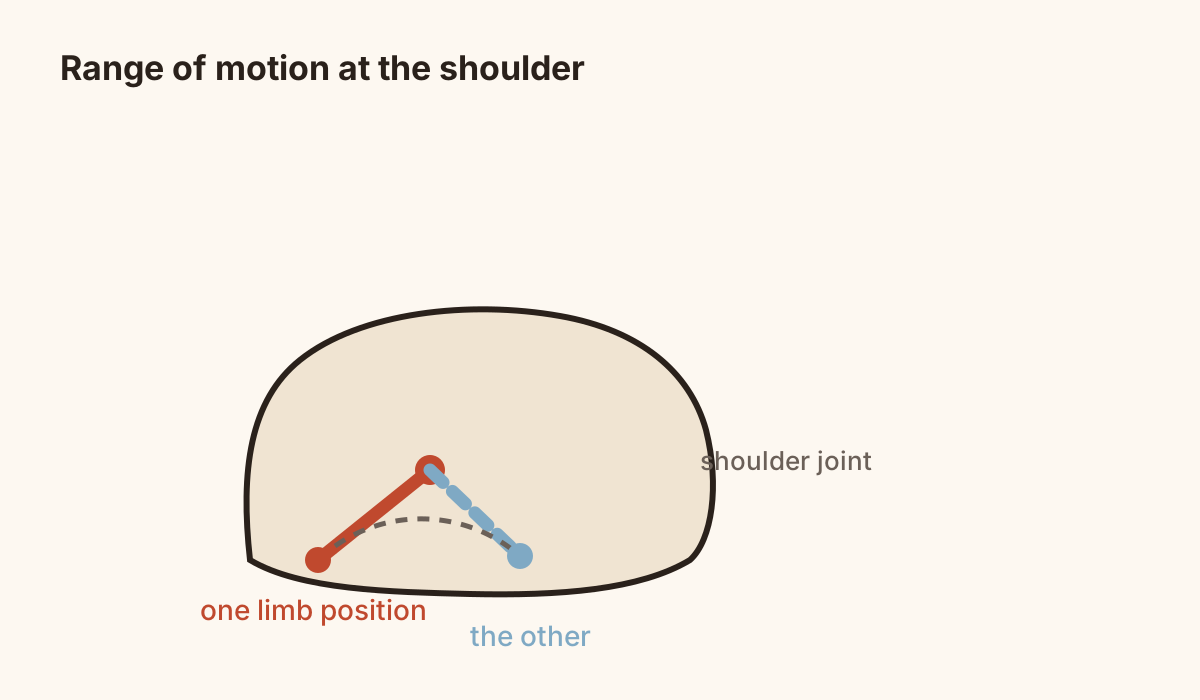
The strap crosses a joint moving through a large arc. Anything sitting on the moving part gets rubbed by it.
Before you adjust anything: is this a vet visit?
Some of these are not fit problems, and buying another harness will not fix them.
- The skin is broken, oozing, or smells
- The redness is spreading, or the area is hot and swollen
- The dog flinches or snaps when you touch it
- It has not closed after a week of keeping it clean and dry
- The same patch goes bald again within days of going back to any harness
A smell usually means microbial overgrowth rather than simple abrasion, and that needs the right topical agent rather than a different strap. Repeated hair loss at the same site in an otherwise healthy dog is also worth raising, because Banovic and Strzok list obesity, atopic dermatitis and other concurrent disease among the things that make folds worse — a dog with an underlying skin problem will keep losing that patch whatever you put on him.
What to do while it heals
Stop using the harness until the skin is closed. Not “short walks only”. The tissue needs to stop being loaded, and every walk restarts the clock.
Keep it dry. This is the part that matters most and the part most people skip — a damp armpit is the difference between a graze that closes in a week and one that gets worse.
Don’t buy a cream yet. If the skin is intact and only pink, ask your vet which wipe they want used on it; the published protocol uses chlorhexidine-plus-antifungal wipes once or twice daily, so the product your vet names is worth more than the one the internet names. If it is broken or smells, that is the vet-first case above.
Don’t let him lick it. A dog working at an armpit all evening keeps it wet, adds bacteria, and can turn a graze into a hot spot. A cone for a few days is kinder than the alternative.
Walk him in something else meanwhile — a flat collar if he does not pull, or a harness that sits clear of the sore side.
The faults worth checking
The strap sits in the armpit rather than in front of it. The chest strap should cross the breastbone below the throat, and the leg straps should pass behind the shoulder instead of through the crease. If a strap disappears into the fold when the dog stands still, it will rub there for the whole walk.
It is too loose. A loose harness slides sideways with every stride, and sliding is what wears hair off. Two fingers should pass under each strap without you pushing them through. If a whole hand fits, it is sliding. The longer version of that check covers the places people get it wrong.
It is too tight. Tight straps press instead of sliding, which leaves a band of red, hairless skin under continuous pressure — sometimes with a dent that stays after you take it off.
The panel is the wrong shape for the dog. This is the cause behind the first fault rather than a separate one. A deep-chested dog in a short panel has the front ring ride up toward the throat the moment he leans, which drags the leg straps backwards into the armpit. A narrow-chested dog in a wide panel gets the two padded sections meeting under the chest, and the harness rocks from side to side as he walks — which is the sliding problem again, arriving from a different direction.
A hard, heat-sealed webbing edge saws through coat, and a strap that stays wet or holds grit does the same.
If you are buying again
- Measure the chest girth at the widest point behind the front legs and buy to that number. Ignore the breed on the box; “medium” varies too much between brands to mean anything.
- Hold it against your dog before you commit, and look at where the leg straps land on him, not on the product photo.
- Prefer padded or rolled edges anywhere the harness touches skin.
- A front ring plus a Y-shaped front keeps straps off the shoulder point on most dogs, and gives you steering if he pulls. What the two clips actually do is worth reading before you pay extra for the front one.
- Leave the tags on until he has done a real walk. Watch the armpits, not the mirror.
Keeping it from happening again
Rinse the harness after wet or muddy walks and let it dry fully before it goes back on. Take it off indoors, because strap rub is cumulative and a dog wearing one all day picks up rub from the floor and furniture too. Check the armpits with your hand once a week; a hot spot or a thinning patch is easy to feel days before you would see it.
What this piece rests on
- Frane Banovic and Emily Strzok, “Skin Fold Dermatitis (Intertrigo) in Dogs,” Today’s Veterinary Practice, 27 September 2019: link. The definition quoted above, the treatment priorities, the chlorhexidine-plus-antifungal wipes used once or twice daily, and the list of concurrent diseases that worsen folds all come from here. It is a clinical article, not a trial. I checked the page on 11 November 2026.
- Not from that page, and not from any study I could find: the four fit faults, the two-finger check, stopping the harness until skin closes, rinsing and drying, the weekly hand check, and the buying checklist. Those are fit and husbandry practice. I found no trial comparing harness designs on chafing rates, which is why this page describes mechanics and gives no incidence figure.